Jardins da Princesa: Interview with Mónica de Miranda
Dear Mónica,
Thank you very much for taking the time to speak with me about your Jardins da Princesa project. Your work has long explored the intersections of memory, space, postcolonial histories, and diasporic geographies, often moving between fiction and documentary while foregrounding strategies of care, resistance, and storytelling. I am grateful for the opportunity to discuss this new project and the ways it continues to unfold across different sites and communities.
Luísa Santos: Jardins da Princesa is a public art project that will be implemented in the Quinta da Princesa Agricultural Park, in Seixal. Quinta da Princesa—once an estate belonging to the Portuguese monarchy—is today a social housing neighbourhood inhabited mostly by African residents. Models of urban development have often marginalised such communities, ignoring their histories and struggles. Peripheral neighbourhoods are often perceived as opaque zones, characterized by stereotypical representations that devalue everyday life, solidarity, and the creative processes that emerge there as forms of resistance. The city has been shaped by policies of exclusion, systemic racism, and gentrification, which have perpetuated marginalisation since colonial times.
Located at the intersection of urban and rural space, these neighbourhoods develop innovative cultural practices, such as urban gardens, which respond to material limitations while strengthening cultural ties. The project will unfold in Seixal but will also comprise a series of public activities in various art institutions in Lisbon, such as HANGAR and MAC/CCB. How will these locations be articulated within the project, both in terms of the themes it addresses and the audiences it engages?
Mónica de Miranda: Jardins da Princesa encompasses intertwined histories and times. Formerly an estate of the Portuguese monarchy, it retains a colonial legacy and is now a social housing neighborhood predominantly occupied by African residents. This double irony of history and territory serves as a reminder of how colonisation was not only the seizure of territory — it was a violent dislocation from cultural and historical roots the consequences of which can still be seen in urban european settings today. By dispossessing people of their land, colonial systems attempted to sever communities from the soil that nourished not only their bodies, but also their sense of belonging and their history. This legacy persists in the form of current gentrification policies in Lisbon. Gentrification acts as a "recolonization" of urban spaces, targeting historically poor and predominantly African neighborhoods.
"Jardins da Princesa is a living illustration of these terrestrial communities and the histories of coexistence and resilience they share."
Jardins da Princesa represents a form of resistance and serves as a site of resilience, where residents have reclaimed land for cultivation, gathering, exchange, and territorial development—thus asserting their right to land and fostering a sense of belonging. This project draws on Achille Mbembe’s idea of terrestrial communities. Mbembe calls for a radical rethinking of the human as inseparable from the Earth and humans from one another. He proposes a vision of co-dwelling: a world where humans, non-humans, and the land coexist within an interdependent network of care, survival, and responsibility. Jardins da Princesa is a living illustration of these terrestrial communities and the histories of coexistence and resilience they share. These Gardens act as places of integration, imagination, and creative power. Through this project, I, as an artist, am bearing witness to, recording, listening to, and acknowledging these histories. These gardens serve as living archives, representing sites of preservation, autonomy, and diverse possibilities. Sites that reflect the continuity between the natural environment and the human body serve as counter-plantations; these biodiverse, non-monocultural plantations provide opportunities for interconnection, learning, and knowledge. The project is conceived as a constellation of spaces rather than a single site of intervention. While Jardins da Princesa originates in the specific context of the Quinta da Princesa Agricultural Park in Seixal, it unfolds through a series of encounters, conversations, and public moments held across different locations in Lisbon. This movement between places is essential, as it fosters connections between communities that are often both physically and symbolically separated. The neighbourhood itself is a space of knowledge, memory, and lived experience.
"By working closely with residents and gardeners, the project seeks to acknowledge these practices as forms of collective intelligence and resilience."
The gardens there are not only places for cultivation, but also for care, exchange, and cultural continuity. By working closely with residents and gardeners, the project seeks to acknowledge these practices as forms of collective intelligence and resilience. The project will take place in Amora/Seixal and will additionally feature a series of public activities at prominent art institutions in Lisbon, such as HANGAR and MAC/CCB. Engaging with these institutional contexts enables the project to broaden its reach and impact. These spaces act as platforms for visibility and critical dialogue, enabling the stories, experiences, and imaginaries emerging from Quinta da Princesa to circulate within wider artistic and cultural networks.
Rather than merely presenting the neighbourhood to institutional audiences, the project aims to facilitate a reciprocal exchange by bringing institutional resources, artists, and audiences into contact with the processes taking place in Seixal, while also opening these institutions to forms of knowledge and cultural production that are often excluded from the dominant narratives of the city.
In this way, the project operates as a relational—almost ecological—system, connecting urban and rural contexts, centre and periphery, and artistic research with everyday practices. The various locations are not separate stages, but rather interconnected spaces through which these dialogues can develop and evolve over time.
Luísa Santos: The Seed Archive, which departs from your larger project Jardins da Princesa and will be developed specifically for the online realm, seeks to record, preserve, and celebrate the agricultural varieties cultivated by African communities in the urban gardens in Lisbon—many of which are tied to practices of subsistence, adaptation, and resilience in contexts of social exclusion.
This project builds upon your long-standing interest in African diasporic communities living in the borderlands between Lisbon’s suburban and rural territories. One example is your post-archive (2020), in which you stored, catalogued, and retrieved documents, photographs, videos, and postcards relating to neighbourhoods such as Talude, Azinhaga dos Besouros, Fim do Mundo, Mira Loures, and 6 de Maio, among others on the outskirts of Lisbon.
More recently, in Greenhouse (2024), the installation’s sculptural elements consisted of plants drawn from tropical botany and cultivated according to the principles of creole gardens. These plants were accompanied by illustrations and texts describing their presence in the garden as well as their medicinal and ceremonial uses. These were published in the accompanying artist’s book.
For The Seed Archive, you invited authors to write stories about the seeds featured in the archive. I am particularly interested in the ways in which you bring together fiction and fact—literary narratives alongside empirical and scientific knowledge. Could you discuss the tensions and affinities between fact and fiction in your understanding of the archive?
Mónica de Miranda: My work blends documentary and fiction, using archival research and fictional stories to address gaps in official histories. Seeds store ancient memories, stories, and cosmologies. I see the archive not as a neutral container of knowledge, but as a space where different ways of knowing can coexist. Even in my earlier project, post-archive, I was interested in how personal memories, photographs, and informal traces of everyday life could exist alongside more official forms of documentation. What gets preserved, what is forgotten, and whose stories are considered valid are always questions of power.
Seeds themselves carry a similar tension. On the one hand, they contain botanical information, agricultural techniques, and ecological histories. On the other hand, they hold memories, beliefs, and cultural practices that are passed on orally or through ritual. In this way, they straddle the line between fact and imagination. The Seed Archive acknowledges this duality: it preserves both the empirical and the ceremonial, the scientific and the poetic.
"Many of the seeds arrived through migration, carried by people seeking to recreate familiar landscapes in unfamiliar places."
Inviting writers to contribute literary narratives was a way to embrace the imaginative side of the archive. Stories can trace the journey of a seed across oceans, evoke the gestures of cultivation handed down through generations, or capture the emotional bonds that people form with plants. Fiction does not replace fact—it complements it, by revealing relationships, histories, and connections that might otherwise remain invisible.
This interplay of fact and fiction also reflects the histories of African diasporic communities in Lisbon. Many of the seeds arrived through migration, carried by people seeking to recreate familiar landscapes in unfamiliar places. By combining documentation, scientific data, and storytelling, the archive becomes a platform on which these multiple forms of knowledge—ecological, cultural, and imaginative—can exist together.
In the end, the archive is alive. It is not a static repository but a space that evolves with the communities that sustain it, where seeds—and the stories they carry—continue to travel, adapt, and inspire. It is as much about remembering and preserving as it is about imagining possible futures.
Luísa Santos: In its physical form (the community gardens) and digital form (the online seed archive), both operating under the collective framework of Jardins da Princesa, the archive unfolds through a public programme comprising workshops and assemblies, inviting reflection on the ecologies of the urban periphery.
This interplay between the artwork and a broader programme of public activities with a pedagogical dimension has become increasingly central to your practice, particularly since Greenhouse was presented at the Venice Biennale. Could you speak about the different kinds of pedagogies involved in this project and the forms of knowledge or exchange they seek to generate?
Mónica de Miranda: The pedagogical dimension of the project begins with the recognition that knowledge is produced in many different ways, often outside of formal institutions. In Jardins da Princesa, the garden itself becomes a space of learning—one that is shaped by the everyday practices of cultivation, care, and collective organisation. The knowledge that circulates there is not only ecological, but also cultural and historical, and is rooted in the lived experiences of the people who inhabit and cultivate these spaces.
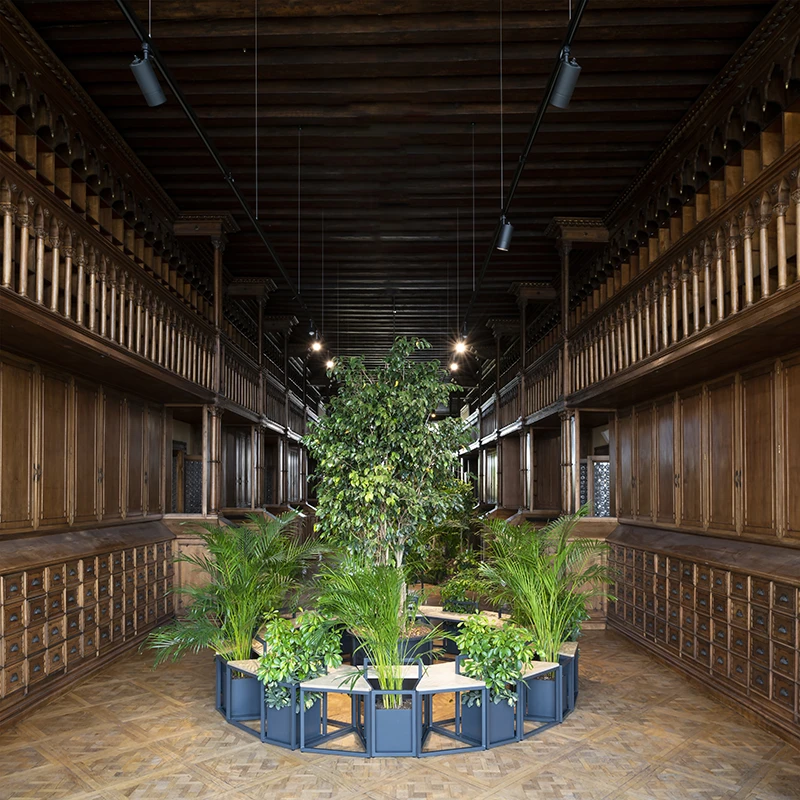
School of the Revolution, 2024
Wood, Iron, Plants, Soil
dimension variable
The workshops and assemblies are therefore conceived less as moments of instruction and more as situations of encounter. They create a framework in which different forms of knowledge can be brought together: the practical expertise of gardeners, the memories and stories carried by local residents, the insights of artists and researchers, and the experiences of individuals who move between different territories and communities. What interests me is how these encounters can open up a space for listening and exchange, allowing knowledge to emerge collectively rather than being transmitted in a linear fashion.
The seed archive plays an important role within this process. Seeds carry with them trajectories of movement and adaptation. They travel with people, crossing landscapes and generations, and often contain traces of migration and diasporic histories. By creating both a physical and an online archive, the project reflects on how these stories can be shared and preserved, while remaining open and evolving.
Rather than presenting fixed narratives, the project functions as a platform where different perspectives can coexist and interact.
My interest in these forms of collective learning became more explicit with Greenhouse, which was presented at the Venice Biennale. Since then, I have been exploring how artistic practice can create environments where dialogue, research, and community participation intersect. Projects such as Jardins da Princesa try to cultivate those environments over time, allowing relationships and forms of knowledge to develop gradually.
Rather than presenting fixed narratives, the project functions as a platform where different perspectives can coexist and interact. The resulting exchanges—between people, plants, memories, and territories—become part of an ongoing process of imagining other ways of inhabiting the city and relating to the spaces we share.
Luísa Santos: Jardins da Princesa emerges directly from Greenhouse. After the Venice Biennale, when the plants from the creole garden had to be deinstalled from the palace, you managed to ship them to Portugal, where they are now located at Quinta da Princesa. There, you have been developing your Black Seed Project, whose seeds also appear in the online Seed Archive.
I find it fascinating how your works often grow out of one another, unfolding through what could be described as a kind of serendipitous continuity. Could you talk about the process of identifying Quinta da Princesa in connection with Greenhouse, and about the links between the different parts of this project?
Mónica de Miranda: The connection between Greenhouse and Jardins da Princesa was no coincidence, but rather part of a longer process that began in 2023 with the project Where cities are invisible, gardens grow. This project combined research, an educational program, and permaculture practices, with the aim of creating the film Invisible Gardens. Developed in close collaboration with the community, it explored and dismantled tropical narratives of Lisbon as a European paradise, reflecting instead on gentrification, the housing crisis, inequality, and urban racism from a regenerative perspective.
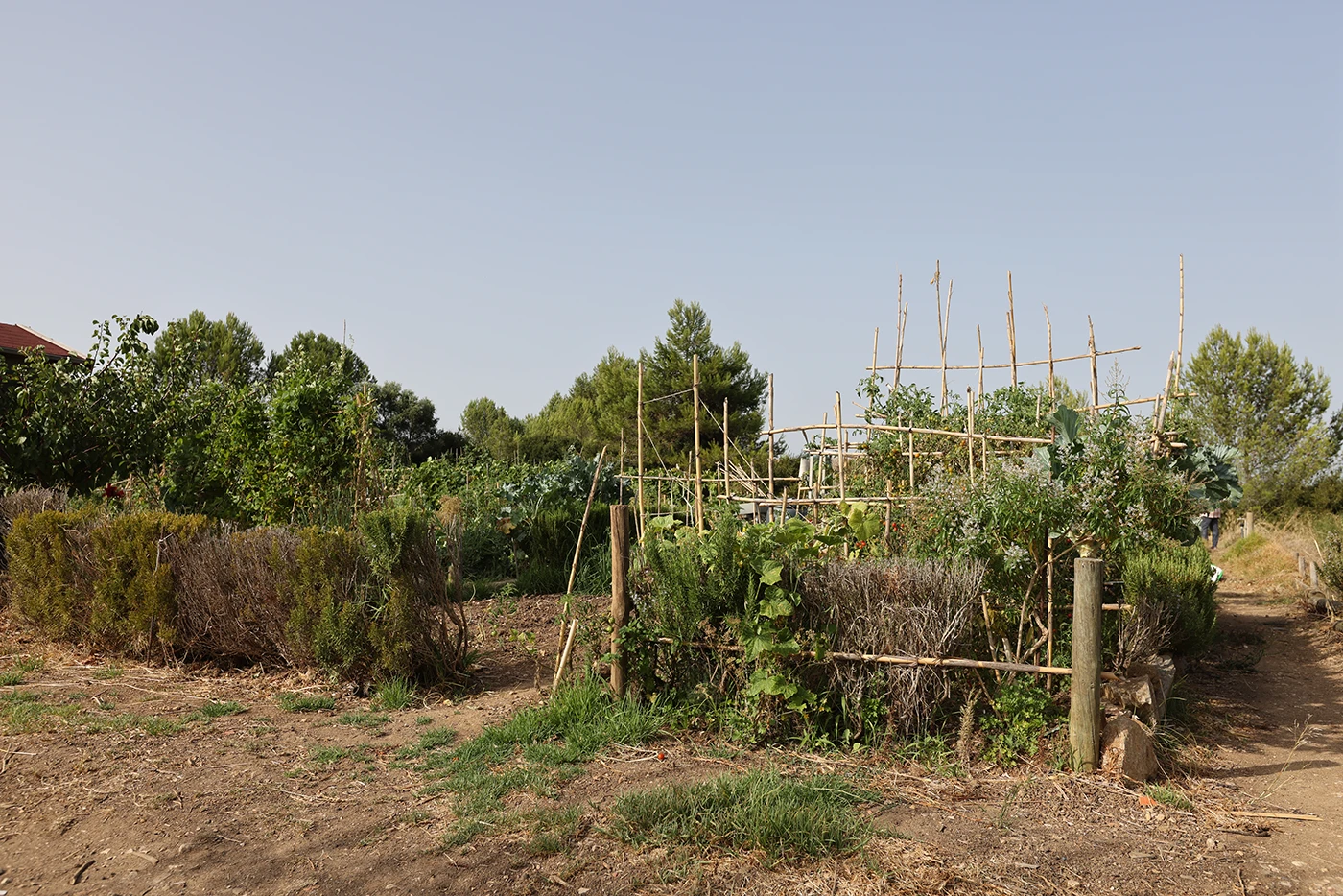
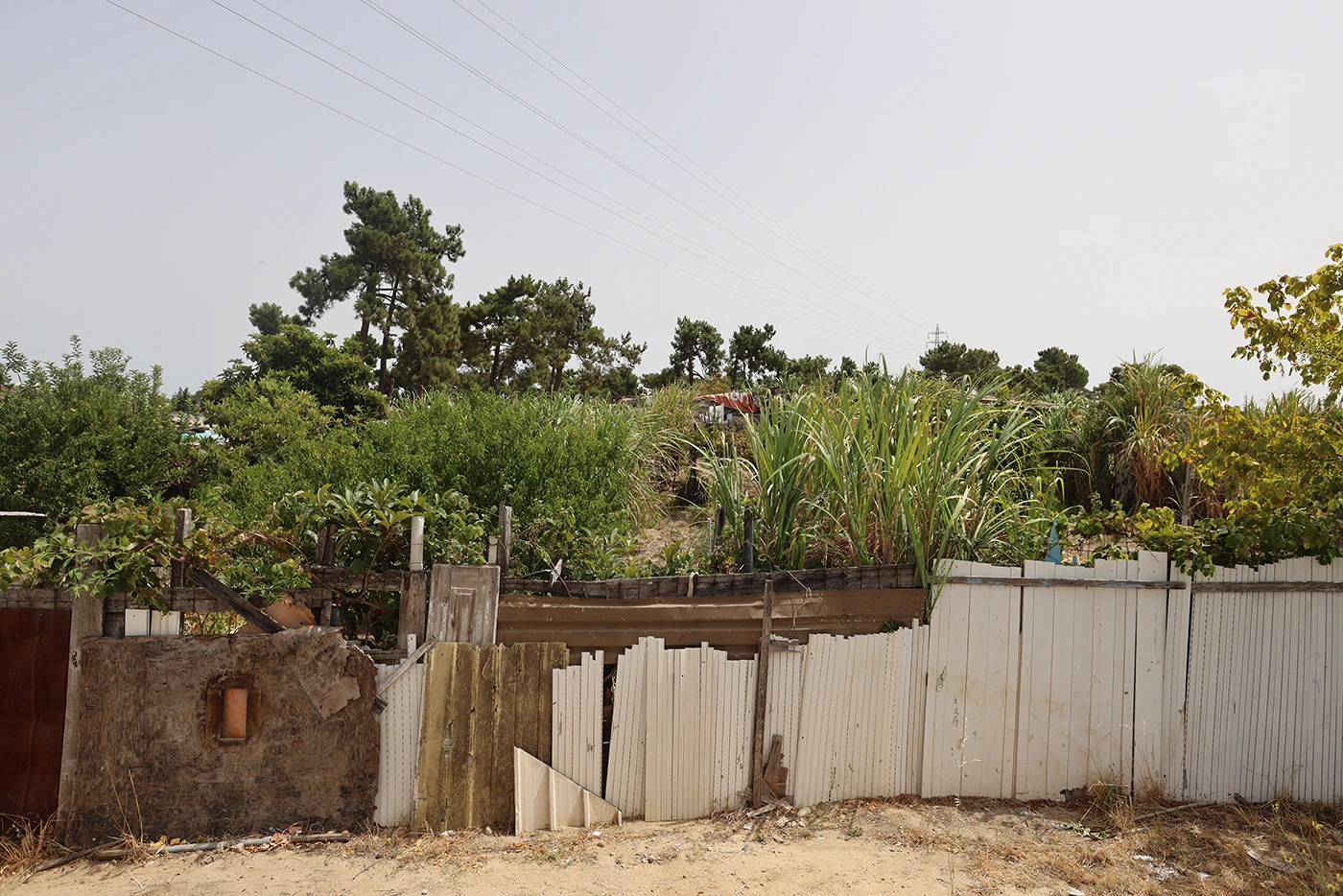
Untitled (Where cities are invisible, gardens grow series)
Inkjet print on cotton paper
60x40 cm
At its core, the project engaged with community practices of resistance and approached the garden as a space where affective ecologies are formed—sites of care, relation, and shared knowledge. It was through this process, and through sustained contact with the community, that the Seed Project emerged.
In this context, moving the plants after the Venice Biennale was both a practical and conceptual continuation. When the plants had to be deinstalled from the palace, it was important that they continue to live within a space where their care, growth, and meaning could be sustained, rather than being dispersed or discarded. They were therefore donated to the project at Quinta da Princesa.
The histories of migration, cultivation, and community resilience present there resonate with the plants’ trajectories and with the creole garden developed in Greenhouse. It was a process of listening and observing—understanding the site as a living social and ecological ecosystem. In this sense, the transplantation is both literal and symbolic: the plants carry memories, histories, and stories that continue to unfold within a different community.
The various elements of the project—the physical gardens, the Seed Project, and the evolving forms of archive and knowledge-sharing—are linked by the idea of circulation. Seeds, plants, and knowledge are in constant motion, crossing boundaries, and generating unexpected encounters. Each element informs the others: the gardens provide material and relational practices, while the broader project traces these movements and allows stories, recipes, and knowledge to travel beyond the immediate space.
To me, the project unfolds like a constellation rather than a linear sequence. One phase flows into another—sometimes through deliberate collaboration and sometimes through encounters that emerge along the way—but always through careful attention paid to the relations between ecology, memory, and community. This practice of listening and care — for the plants, the knowledge they carry, and the communities that sustain and transform them — is what gives the project its continuity.
Luísa Santos: I would like to conclude by returning to the question of the connections between your projects. One of the many threads running through your work - particularly in films such as Path to the Stars (2022), Transplanting (2024), and As if the World Had No West (2025) - is the way you weave your characters’ intertwined narratives into a visual language shaped by ecofeminist sensibilities. These appear as living repositories of geological time and embedded memory, where ancestral and ecological traumas linked to colonial extraction continue to manifest. They become visible as forms of gender-based violence affecting both bodies and lands, as well as through the ongoing extraction of natural resources.
How do these ideas and concerns emerge within Jardins da Princesa?
Mónica de Miranda: Many of the concerns that feature in my films are also present in Jardins da Princesa, albeit in a different form. In works such as Path to the Stars, Transplanting, and As if the World Had No West, the narrative often unfolds through characters who move across landscapes carrying multiple temporalities—geological, historical, and personal. These landscapes are not merely backgrounds; they hold memory and reveal the traces left by colonial histories and by the ongoing extraction of both human and natural resources. They can also be understood through African Indigenous cosmologies, where land, ancestors, and the spiritual and material worlds are deeply interconnected, and where existence is shaped by relationships between visible and invisible forces.
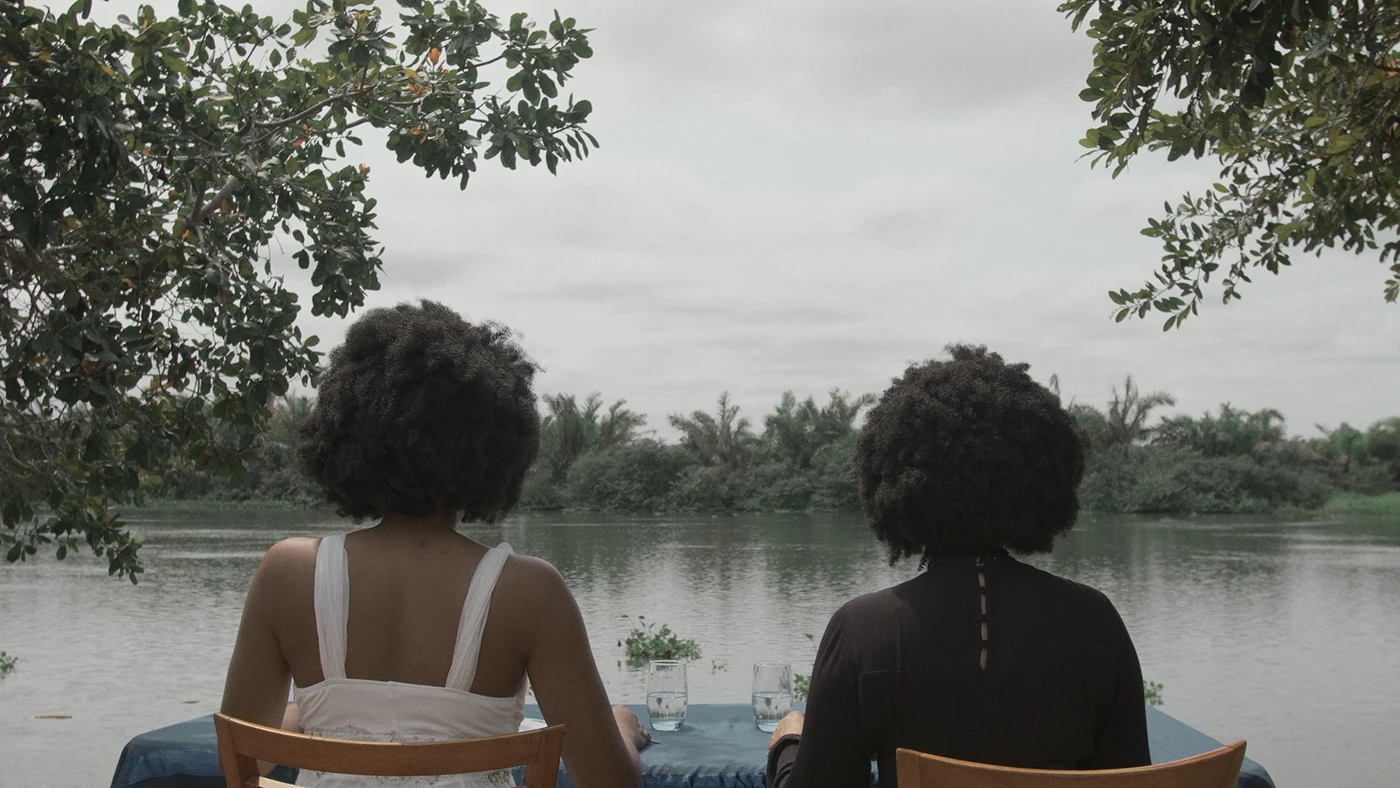
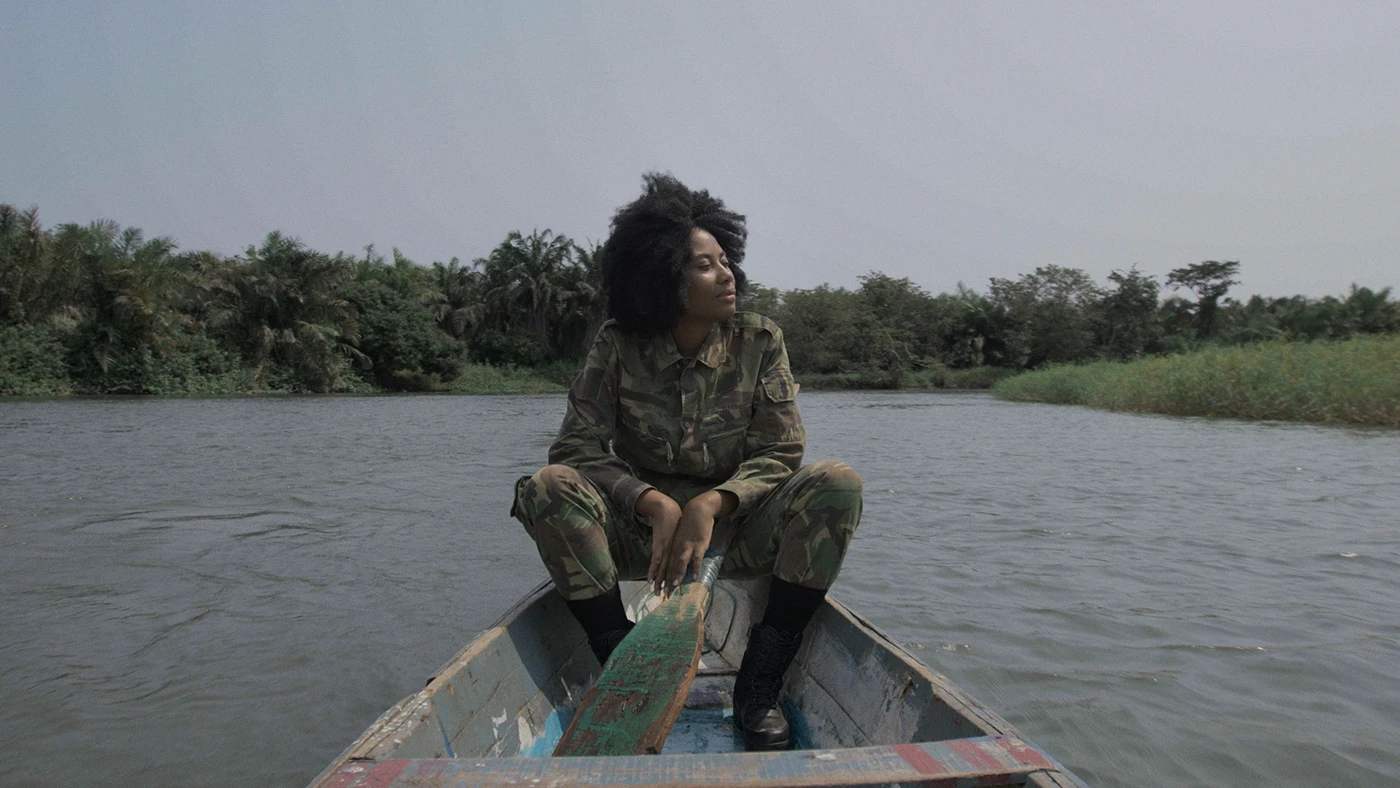
Path to the Star, 2022
stills from film Path to the Stars
HD video, color and sound
34'41''
Ecofeminist perspectives are particularly important in thinking through these relationships. The work of thinkers such as Vandana Shiva had a profound influence on me, especially her insights into the links between ecological devastation, colonial forms of extraction, and the marginalisation of women’s knowledge. Shiva writes about seeds as a form of living heritage and about the importance of seed sovereignty—of communities maintaining the ability to cultivate, exchange, and preserve their own seeds outside of corporate or extractive systems.
The gardens therefore become places where memory is cultivated alongside plants.
This thinking resonates strongly with me. The idea is not only to collect seeds but to recognise the cultural and historical knowledge embedded within them. Many of these seeds travel with people as they migrate, bearing memories of other landscapes and agricultural traditions. In this way, the archive also echoes the idea of community seed banks, where preservation is inseparable from sharing, cultivation, and collective responsibility.
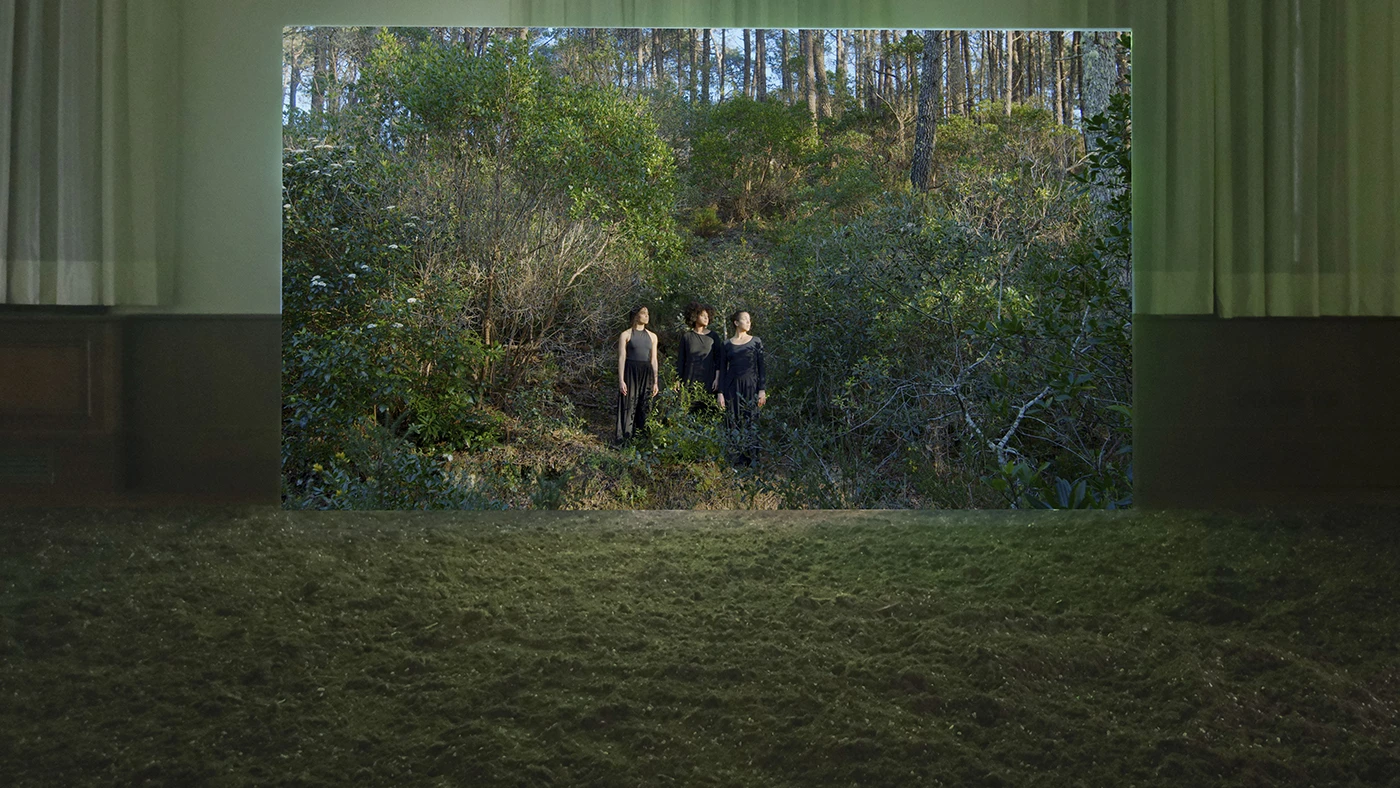
Transplanting
Wood, soil, HD Video color and Sound
13'02''
installation view
The gardens therefore become places where memory is cultivated alongside plants. They hold stories of displacement and resilience, but they also open up a space to envision other relationships with the land—relationships based on reciprocity, care, and continuity rather than extraction. This is reflected in the way native and diverse forests grow: through complex, interconnected root systems that support communication, nutrient exchange, and mutual resilience between species. Unlike monoculture systems, which isolate and deplete the land, these ecosystems thrive through diversity, interdependence, and cooperation. This ecological logic is mirrored in my work, where different voices, histories, and forms of knowledge are brought into relation—supporting one another and growing collectively rather than existing in isolation or hierarchy.
Through these processes, the project reflects on how ecological practices can also become forms of social and historical repair. Across my work, landscapes and bodies are always intertwined, and ecological issues cannot be separated from histories of migration, colonialism, and resistance. Jardins da Princesa extends these reflections further into a collective and lived environment, where cultivation, gathering, and exchange become part of an ongoing dialogue between memory, ecology, community, and the interconnected systems that sustain life.